

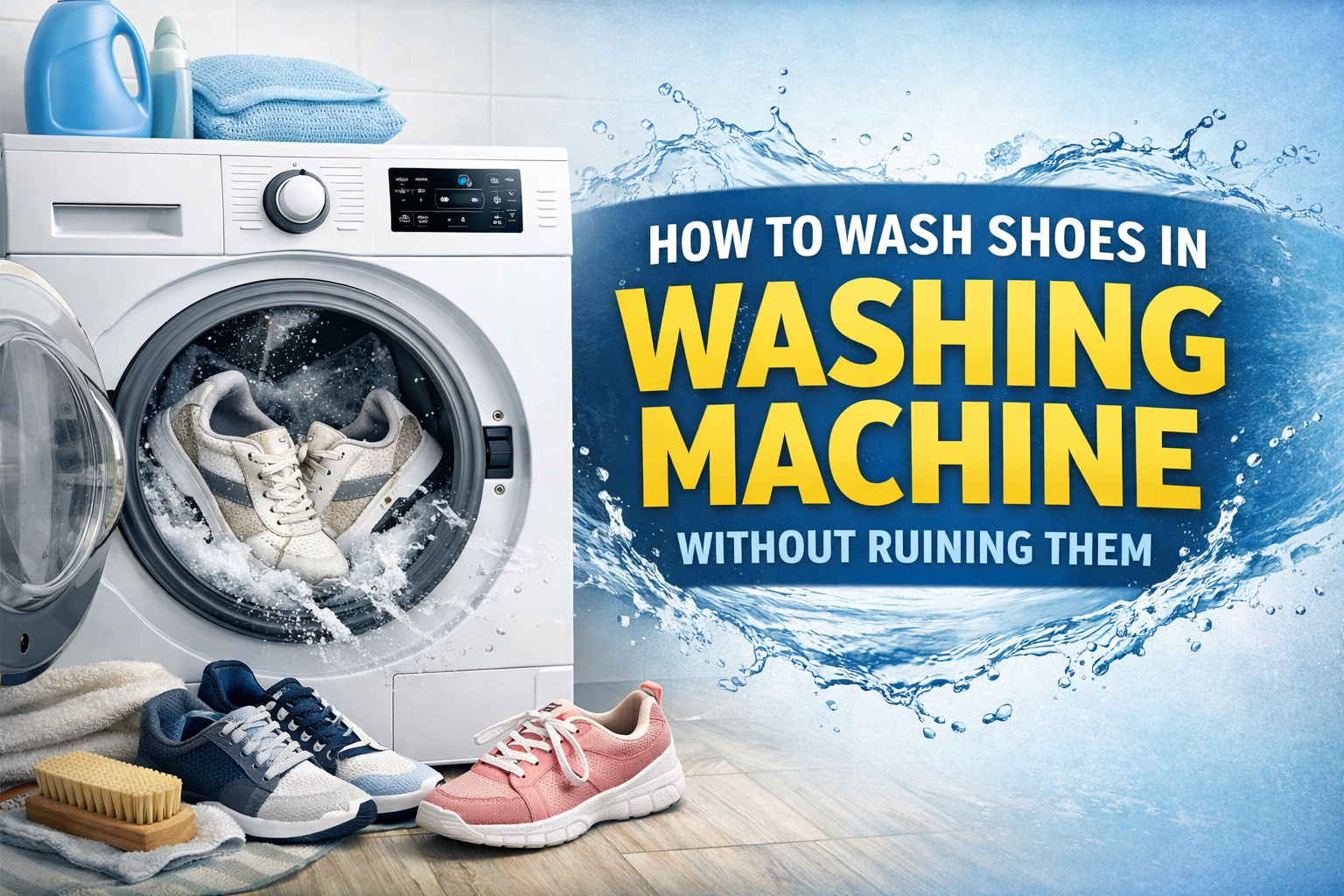
Dirty sneakers have a way of making everything feel messy. Tossing them in the washer sounds like the easiest fix, but the wrong pair or the wrong settings can leave you with warped soles, loose glue, or a washer that bangs like a drum. This guide shows how to wash shoes in washing machine safely, with a simple process that protects both your shoes and your washer from grit, rocks, and heavy thumping.
Before You Start, Can Your Shoes Go in the Washer?
Not all shoes handle water, soap, and agitation the same way. Think of the washer like a strong current in a river, it’s great for sturdy materials, rough on delicate ones.
Shoes that usually wash well (canvas, nylon, athletic sneakers)
Many everyday sneakers can handle a gentle wash because they use fabrics that don’t mind water and they dry more predictably.
Washer-friendly shoes often include:
- Canvas sneakers (like basic casual shoes)
- Nylon or polyester athletic shoes
- Knit running shoes (when the structure feels flexible, not stiff)
- Rubber slide sandals (in a mesh bag, gentle cycle)
Even with these, heat and high spin can cause trouble. Glued areas can soften, and some foam midsoles can deform if you use warm water or aggressive cycles. Stick to cold water and gentle movement to lower the risk.
If you want a second opinion on safe methods and settings, Better Homes and Gardens has a helpful overview of washing shoes in the washing machine without damage.
Shoes to keep out of the washer (leather, suede, waterproof, heavy boots)
Some shoes and washers just don’t mix. Leather and suede can stiffen, crack, or lose their finish. Waterproof shoes may lose the coating that keeps water out, which defeats the whole point. Heavy boots can slam the drum hard enough to cause damage, especially during spin.
Avoid the washer for:
- Leather shoes (smooth leather, coated leather)
- Suede or nubuck
- Waterproof shoes and boots (membranes, sealed seams)
- Work boots or hiking boots with heavy soles
- Shoes with lots of decoration (sequins, glued-on trims)
Instead, spot clean with mild soap and a damp cloth, then air dry. For suede, use a suede brush and keep water minimal. Your shoes last longer, and your washer avoids unnecessary wear.
How to Wash Shoes in Washing Machine, Step by Step
A good shoe wash starts before you touch the Start button. The goal is clean shoes, plus a washer that stays balanced and grit-free.
Prep your shoes the right way (remove laces and insoles, brush off dirt, pretreat stains)
Start by stripping the shoes down so everything gets clean, and nothing gets trapped.
Remove laces and insoles. Laces tangle and insoles hold odor and grime. Washing them separately improves results and helps shoes dry faster.
Next, shake out grit and tiny rocks. Pay attention to the tread. Small stones can break loose and end up where you don’t want them.
Brush off dried mud with an old toothbrush or soft scrub brush. Wipe the soles with a damp cloth to remove loose dirt, since that dirt turns into sludge inside the washer.
For stains, pretreat with a drop of mild liquid detergent mixed with water. Scrub gently and keep the pressure light, especially around glued seams.
If the insoles smell, sprinkle baking soda on them overnight, then brush it off in the morning. This step helps a lot, and it doesn’t add risk to the shoes.
Load and settings that protect the shoes and the washer
The biggest washer risk is impact. Shoes can bang the drum, and an unbalanced load can make the machine thump or even “walk.”
Put shoes in a mesh laundry bag or a tied pillowcase. This reduces scuffing and keeps laces from getting pulled into the drum. Add 2 to 3 old towels to help balance the load and soften the impact. Skip brand new towels if they might bleed dye.
Use these settings for most washable sneakers:
- Gentle or delicate cycle
- Cold water
- Low spin, or no spin if your washer allows it
Don’t overload. One pair at a time works best for bulky shoes. If you hear heavy thumping, pause the cycle and rearrange the towels and shoes so weight spreads more evenly.
Detergent, what to skip, and how to handle laces
Use a small amount of liquid detergent. It dissolves easily in cold water and rinses cleaner from fabric uppers. Powder can clump in cold washes, which sometimes leaves residue on dark shoes.
Skip harsh add-ons unless you truly need them:
- Avoid bleach unless the shoes are plain white and color-safe
- Skip strong stain removers on unknown fabrics, they can cause fading
- Avoid fabric softener, it can leave a coating that traps odor
For laces, you have two easy options. Wash them in a small mesh bag in the same cycle, or hand scrub them in warm soapy water for a quick refresh. Arm and Hammer also shares practical tips for washing shoes and shoelaces by hand or in the washer.
Drying shoes safely (no dryer)
Air drying is the safest choice. Dryer heat can shrink fabrics, warp foam, and loosen glue, even when the wash went perfectly.
After washing, pat excess water off with a towel. Stuff shoes with paper (or clean rags) to hold their shape. Swap the stuffing when it feels damp so drying doesn’t stall.
Dry them in the shade with good airflow, near a fan if you have one. Most sneakers take 24 to 48 hours to dry fully. Wait until they feel dry deep inside before wearing them, or you’ll trap moisture and invite odor back.
If you want a deeper guide on timing and do’s and don’ts, Martha Stewart covers the basics of washing shoes in a washing machine the right way.
Common Problems and Quick Fixes (Noise, Smell, Shape, and Color)
Even careful washes can cause a surprise or two. These quick fixes save time, and they can prevent washer damage.
If the washer bangs, leaks, or smells after washing shoes
Banging almost always means imbalance. Stop the cycle, open the door, and reposition everything. Move towels to the opposite side of the drum from the shoes, then restart on a lower spin. If it keeps happening, wash one pair at a time.
If your washer has a drain pump filter area, check it for trapped grit. Tiny rocks and sand can collect after shoe loads.
After the wash, run an empty rinse cycle to flush out leftover dirt. Then wipe the door seal and the inside lip of the drum, since grime likes to hide there.
If noise continues after that, it may point to a mechanical issue, especially if the washer clunks during normal laundry. For service help, see this Edmonton washing machine repair service.
If shoes still smell or look dingy after the wash
If odor lingers, don’t jump to hot water. Repeat a gentle cold wash, then air dry longer. Between washes, use baking soda on the insoles again, and let it sit overnight.
If the uppers look clean but the midsoles still look gray, spot scrub the rubber with mild soap and a soft brush. This targets the part that shows scuffs most.
For color issues, wash similar colors together and test any cleaner on a hidden area first. Also avoid heat, because heat can set stains and make fading worse.
Conclusion
Washing shoes in a washer works best when you treat it like a careful rinse, not a rough scrub. Confirm the shoes are washer-safe, then prep them well by removing laces, insoles, and loose grit. Use a bag plus a few old towels, stick with a cold gentle cycle, and always air dry to protect glue and shape. Just as important, protect the washer from imbalance, banging, and leftover sand in seals and filters. If your machine starts thumping after shoe day, Escan Appliance Services can help, and you can get back to laundry that runs naturally and quietly again.


